
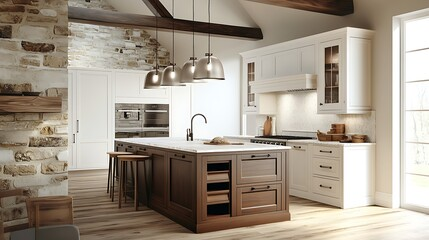
Cabinet Painting Sacramento can completely transform the look of your kitchen. To achieve a smooth finish that will last, proper prep is key.
First, empty your cabinets. Then, use a trisodium phosphate (TSP) cleaner to clean the surfaces. Empty drawers as well. Be sure to label where each door and drawer goes with painters tape before removing them.
Clean the Cabinets
If you are planning to repaint your kitchen cabinets, the first step is to remove all of the hardware (handles and pulls) from the cabinet doors. This will allow you to paint around them easily. Next, take a damp cloth and clean the surfaces of the cabinets. This will remove any dust, dirt or grease that has built up on the surface of the cabinet. If there is a lot of grease or oil, you may need to use a degreaser on the surfaces to cut through it and make them smooth for painting. A good quality degreaser should be able to eliminate the grease and oil within a few minutes. Be sure to test any cleaner on a small area of your cabinets before applying it to the entire surface so that you know whether it will damage your cabinets or cause discoloration.
Once the cabinet surfaces are cleaned, it is time to prime them. A high-quality primer is essential to ensuring that the top coat of paint adheres properly and looks great. Sherwin-Williams recommends their Extreme Bond primer for cabinet refinishing projects because it provides superior adhesion and a strong base coat for the topcoats to adhere to.
It is also important to use a mildew-resistant primer in moisture-prone areas such as kitchens. This will prevent any mildew growth that could potentially affect the longevity of your new paint job. After priming, let the cabinets dry for at least 24 hours before proceeding with the rest of the refinishing process.
A light sanding of the surfaces of the cabinets will help to smooth any imperfections that are present. This is especially important for the cabinet door edges, where scuffing can occur due to daily use. Use a medium-grit sandpaper, such as 100- to 150-grit. If you have a harder time getting rid of any scuff marks, you can always use 220 grit sandpaper to get the job done.
After sanding the cabinet surfaces, wipe them down with a damp cloth to remove any dust and debris. This will prepare the surfaces for the final step of prepping the cabinets for painting, which is to apply a thin layer of spackling paste with a putty knife. This will fill any cracks or holes that are present on the cabinet doors and frames. After the spackling paste has dried, it can be lightly sanded with the sandpaper once again to smooth the surface for painting.
Scuff Sand the Surfaces
When painting cabinets, a high-quality primer is an essential part of the process. It lays the foundation for your paint job, helping the new coats of color adhere to the cabinet surfaces and resist chipping or peeling later on. A good primer also provides a smooth base for the new paint job, making the final result even and attractive.
When choosing a primer for your project, it’s important to consider the conditions that will be most common in your home. If you live in a humid environment, for example, you may need to use a degreaser like Krud Kutter or another oil-based product to get rid of excess grease that can build up on kitchen cabinets and prevent proper adhesion.
For most clean surfaces, however, a good all-purpose primer such as Fresh Start or Extreme Bond Primer is ideal. These acrylic primers offer maximum hide and suppress stains, plus they provide excellent adhesion to wood and other substrates. A quick test application in an inconspicuous area can help you determine if the primer is suitable for your needs.
While you’re at it, it’s a good idea to lightly sand any areas where the cabinet surface is very rough. This can include deep gouges, nicks, scratches, and rough or uneven bare wood. For best results, it’s a good idea to tape off the area around any damaged areas you are working on. This will minimize unintentional sanding beyond the damaged area.
You should also lightly sand any painted areas where the cabinet finish is a darker color, to prepare them for a lighter paint job. It’s also a good idea to sand any areas that will be repainted with a glossier product, such as semi-gloss or satin. A light sand with 220 grit sandpaper can be helpful in getting these areas ready for their new coat of paint.
Finally, don’t forget to clean the hardware before you start painting. It’s a simple step that can significantly affect the final appearance of your cabinet paint job. Be sure to work with a soft, lint-free cloth to avoid damage from the metal’s sharp edges. If you’re looking to make your hardware really pop, try using a spray can of BEHR PREMIUM Metallic spray paint to give it an elegant sheen.
Prime the Cabinets
A light coating of oil-based primer is all you need to prep cabinets for painting. It will improve the adhesion of paint, preventing chipping and peeling later on. I used KILZ 3(r) PREMIUM Primer because it has great adhesion, even on glossy surfaces, and is mildew-resistant which is ideal for moisture-prone areas like a kitchen.
After applying the primer, you’ll need to sand again, this time very lightly. Using a 220 grit sponge, you’ll need to knock down any high points of the surface and wipe it down again with a tack cloth. This will give you a really smooth finish. Be sure to work in good lighting so that you don’t miss any spots.
After sanding, it’s important to clean again with mineral spirits. This product will not swell the wood and it will also help to remove any remaining dust particles. Be sure to do this in a well ventilated area because the fumes can be strong. Once you’re done, use a tack cloth to pick up any lingering bits of dust and dirt. It’s a good idea to number your doors as you take them off so that they go back in the right place once you’re done painting.
Clean the Hardware
When painting kitchen cabinets, it’s not uncommon for the hardware to be painted too. This is especially true for cabinet knobs and pulls, which are frequently subject to the heat of stoves, water and food splatters, or oil from hands. So it is important to clean these items before reinstalling them.
If the hardware is in good condition, it may be able to be sanded and repainted with little trouble. But, in some cases the existing paint may need to be stripped completely before the hardware can be reinstalled. There are chemical stripping products designed specifically for this purpose. Follow the manufacturer’s directions for using these products to remove the old paint from your hardware. Be sure to clean the hardware after stripping it thoroughly to remove any product residue and odors.
Mechanical removal methods, such as sanding and wire brushing, can also be effective for removing stubborn paint from hardware. However, they can be messy and difficult to control, especially when dealing with metal surfaces that are easily damaged. For this reason, it is often preferable to use chemical strippers when working with delicate hardware.
After the hardware is removed, the cabinets should be cleaned thoroughly with a degreasing cleaner such as TSP (trisodium phosphate). This is particularly important for kitchen cabinets, where grease and steam can build up over time. This step is also important for preparing the cabinet surface for primer and paint.
Before priming, the surfaces should be allowed to dry completely. A few hours is usually sufficient. If a second coat of priming is desired, this should be applied after the first one has dried.
The choice of primer is an important decision, especially in a high traffic area like a kitchen. For these cabinets, I chose KILZ 3(r) PREMIUM Primer because it provides excellent adhesion to prevent future paint chipping and peeling, as well as a mildew-resistant coating to keep the paint looking great for years to come.
After the primer is dry, the cabinets can be painted with your chosen color of paint. I used Benjamin Moore Backwoods, which is an alkyd paint that will hold up to the wear and tear of a kitchen. Alkyd paints, such as this and Sherwin Williams WP-500WP Interior Semi Gloss Enamel, are formulated to be durable and stain resistant.